How to Unclog Any Drain: DIY Steps & When to Call a Pro
You turn on the tap. The water rises, swirling dangerously close to the rim. Panic sets in. Is it a simple clog—or the tip of a bigger plumbing iceberg?
At Super Snake Plumbing, we know how fast a slow drain can turn into an emergency. Whether it’s the kitchen, bathroom, or utility room, clogged drains always seem to strike when you least expect it. Our licensed team is ready 24/7, but before you reach for the phone, here’s what you need to know—and what you can do right now.
The Most Common Causes of Drain Clogs
Kitchen, bathroom, laundry room, or basement—every drain has its own enemies. Here’s where clogs strike most and why.
Kitchen Drains
- Grease & Oil: Like cholesterol in arteries, grease hardens and narrows your pipes.
- Food Scraps: Even with a garbage disposal, things like coffee grounds and eggshells build up.
- Soap Residue: Over time, it adds a sticky film that traps everything else.
Bathroom Drains
- Hair: The classic culprit. Hair twists and tangles around soap, forming tough clogs.
- Soap Scum: It binds with hair and debris, creating a stubborn mass.
- Toiletries: Cotton swabs, wipes (even “flushable” ones), and dental floss wreak havoc.
Utility & Laundry Drains
- Lint: Escapes from washing machines and collects in drainpipes.
- Detergent Buildup: Thickens over time, especially with hard water.
- Dirt & Debris: Muddy clothes or pet baths can overload the system.
Quick Safety Checklist Before You Start 🛑
Clogs may look harmless, but pipes are under pressure. Take these steps before any DIY fix:
- Turn off Water: Especially if water is backing up.
- Wear Gloves: Protect your hands from bacteria and sharp debris.
- Ventilate the Area: Especially if using any cleaning solutions.
- Never Mix Chemicals: Mixing store-bought drain cleaners can create toxic fumes.
- Keep Children & Pets Away: Safety first, always.
Step-by-Step: DIY Unclogging Methods That Work
Not every clog needs an emergency plumbing call. Try these safe, home-tested methods.
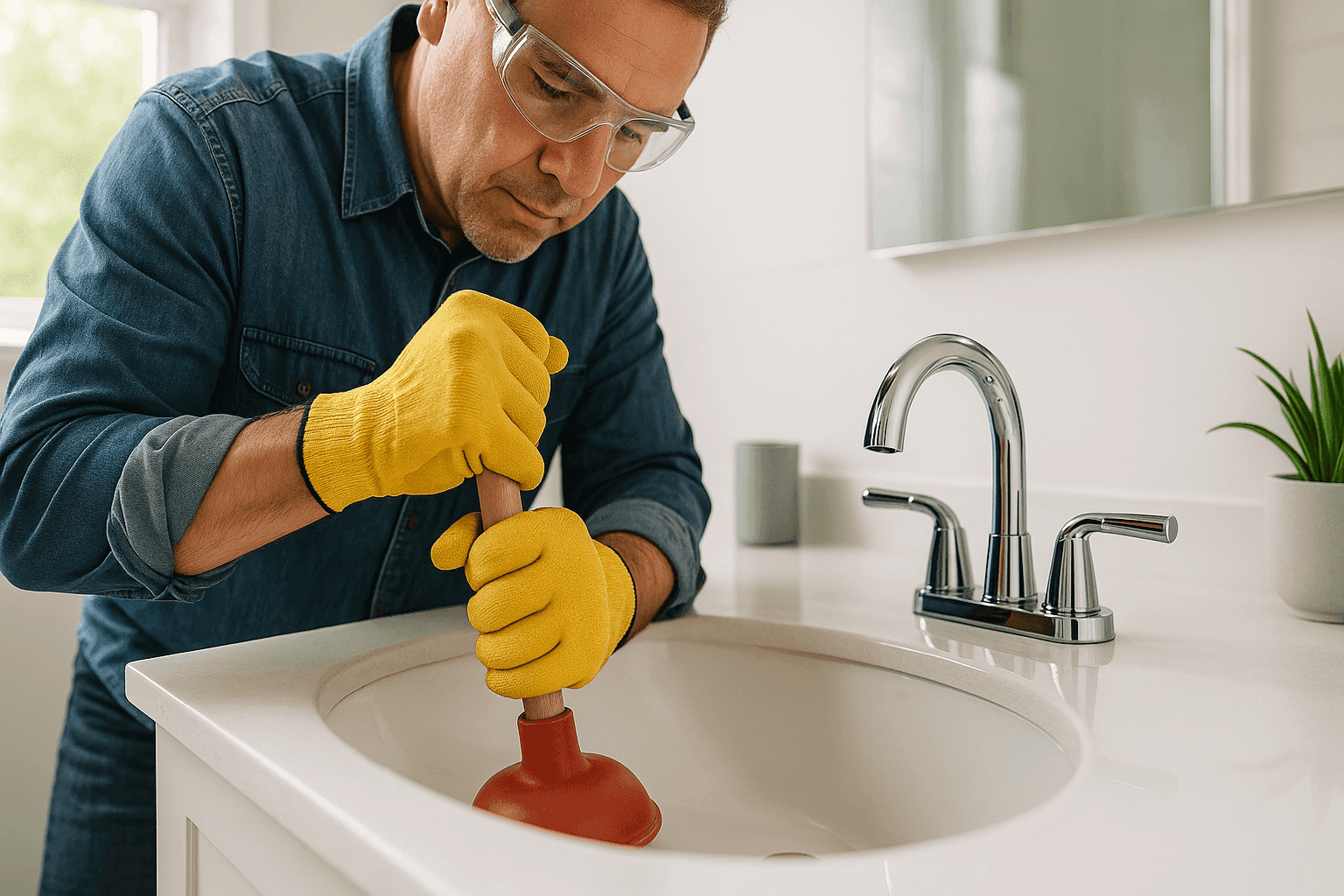
1. The Plunger
- Choose the Right Plunger: Cup for sinks, flange for toilets.
- Seal the Drain: Make sure there’s enough water to cover the plunger’s cup.
- Plunge Firmly: 10–15 steady pushes. You should feel resistance, then hopefully a rush as the clog loosens.
2. Baking Soda & Vinegar
- Pour 1 Cup Baking Soda: Directly into the drain.
- Add 1 Cup Vinegar: Watch for fizzing.
- Wait 15–30 Minutes: For the chemical reaction to break down debris.
- Flush with Boiling Water: Finish with a kettle of hot water to wash away residue.
3. Manual Removal
- Remove Drain Stopper: Use a screwdriver if necessary.
- Pull Out Debris: A wire coat hanger, zip tool, or gloved fingers work. Go slowly.
- Rinse Thoroughly: Hot water to flush the remaining gunk.
What Not to Pour Down Your Drain
- Harsh Chemicals: Store-bought drain cleaners can corrode pipes, especially older ones.
- Paint, Grease, or Oil: Never pour these down any household drain.
- Coffee Grounds & Eggshells: They clump together and cause blockages.
- Flushable Wipes: They don’t break down and are notorious for causing sewer backups.
When DIY Isn’t Enough: Signs It’s Time to Call a Pro
Sometimes, a clog is just the visible part of a bigger problem. Here’s when you need expert help:
- Recurring Clogs: If the same drain blocks up again and again.
- Slow Drains in Multiple Spots: Signals a main line or sewer issue.
- Foul Odors: Persistent smells mean trapped sewage or rotting debris.
- Water Backup: Water in tubs or floor drains when you flush or use other fixtures.
- Strange Noises: Gurgling or bubbling from drains or toilets.
These red flags often mean the problem runs deeper than a simple blockage, possibly involving sewer lines or hidden leaks. Left unchecked, they can risk major water damage or even health hazards.
What the Pros Do On Arrival 🧰
When Super Snake Plumbing shows up, here’s what to expect:
- Inspection & Diagnosis: Using video cameras or leak detection tools to find the source.
- Safe, Code-Compliant Clearing: Professional-grade snakes, augers, or hydro-jetting (as approved by local plumbing codes).
- Pipe Assessment: Checking for cracks, corrosion, or root invasion.
- Cleanup & Prevention Advice: Ensuring your home is safe and dry before we leave.
Our team adheres to the latest safety standards set by organizations like the International Association of Plumbing and Mechanical Officials (IAPMO) and local building codes.
Prevention & Maintenance: Stopping Clogs Before They Start
A few simple habits can keep your drains flowing free:
- Use Drain Screens: Catch hair and food before they disappear.
- Dispose Properly: Grease goes in the trash, not the sink.
- Flush Drains Regularly: Pour boiling water weekly to clear soap and scum.
- Run Cold Water with Disposal: Keeps fats solid and moving.
- Schedule Regular Inspections: Annual checkups can spot trouble before it grows.
Costs & Time Factors: What to Expect
Clog fixes range from a few minutes to several hours, depending on the cause.
- DIY Time: Most home solutions take under an hour.
- Pro Visit: Simple clogs often resolved within an hour; complex blockages or pipe repairs may take longer.
- Costs Vary: Factors include location of the clog, severity, and if emergency plumbing is needed after hours.
Preventative maintenance is almost always less expensive than emergency repairs or water damage restoration.
When It’s a True Emergency 🚨
Some situations need immediate action. Don’t wait if you notice:
- Rising Water: Approaching electrical outlets or flooding floors.
- Sewage Backup: Any sign of raw sewage in the house.
- Gas Smells: Some drain issues are linked to gas lines—call for help right away.
- No Water Flow: All drains in the house stop working.
These problems can damage your home’s structure or pose serious health risks. In these cases, emergency plumbing is essential—don’t go it alone.
Quick Troubleshooting Chart
-
Problem: Water drains slowly
DIY: Plunger, baking soda & vinegar
Pro Needed?: If multiple drains affected -
Problem: Foul odor
DIY: Flush with hot water, clean stoppers
Pro Needed?: If odor persists -
Problem: Gurgling noises
DIY: Try plunger
Pro Needed?: If noises in several rooms -
Problem: Recurring clogs
DIY: Remove stopper, clear debris
Pro Needed?: If it keeps coming back
FAQ: Common Drain Questions
How often should I clean my drains?
At least once a month with hot water or a baking soda/vinegar flush. Annual pro inspections are smart, especially for older homes.
Are chemical drain cleaners safe?
Most are not. They can damage pipes and are dangerous if mixed. Stick to mechanical or natural methods, or call a licensed plumber.
What causes my shower to back up when I run the washer?
Usually a sign of a main line clog or improper venting. These issues need a professional assessment.
Can I use a snake on my own?
Manual snakes are fine for minor clogs, but powered equipment can damage pipes if used improperly. If unsure, call a licensed technician.
Local & Seasonal Considerations
In colder months, pipes can clog or freeze more easily. Watch for slow drains or gurgling sounds after a cold snap. In spring and fall, roots can invade outdoor sewer lines—common in mature neighborhoods.
If you live in a home with older pipes (like galvanized steel or cast iron), be cautious: aggressive DIY methods can cause cracks. Always check your building’s plumbing codes for approved cleaning solutions and methods.
Clog won’t budge? Don’t risk water damage or costly repairs. Call Super Snake Plumbing now — or reach us anytime at 877-837-7140 .